Experience of 15 years in the selection of bees resistant to Varroa in Argentina
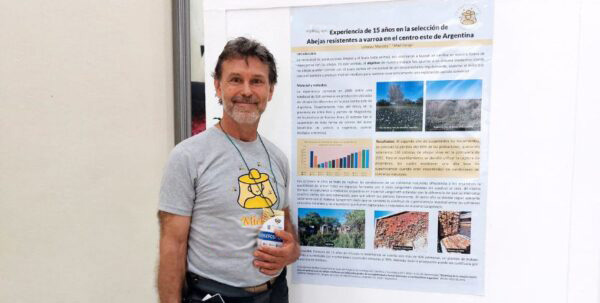
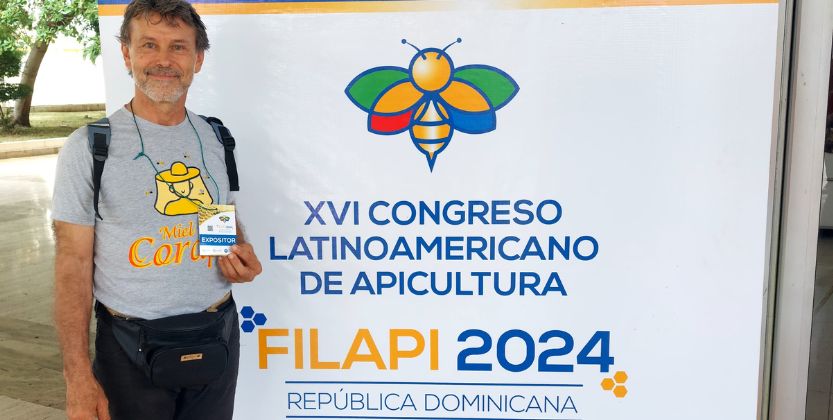
We went to the XVI Latin american Congress of Apiculture, FILAPI 2024, in the Dominican Republic to present a paper on our experience of selection of bees resistant to Varroa. Below we leave you the results of this research.
The need for clean productions and good animal treatment, motivated us to seek a change in how we deal with the bees. In this sense, the objective of our work was to point to a production system where the bees can live with the Varroa mite without the need to be dewormed regularly, to withstand the damage caused by the parasite and produce honey without waste to support a honey farm business.
Material and methods
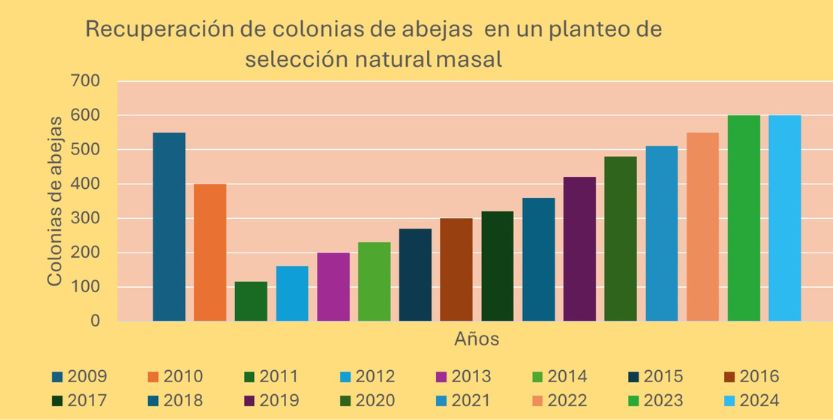
The experience began in 2009 on a total of 550 hives in production located in 10 different apiaries in the east-central area of Argentina, Department Islas del Ibicuy in the province of entre Ríos, and Magdalena district in the province of Buenos Aires. The method was the suspension of any form of control of the mite ( synthesis or organic acaricides, biological or thermal control).
The results
In the second year of suspended treatments, it was observed the loss of 80% of the population, leaving only 116 colonies of bees living in the spring of 2011. For the repopulation was decided to use the capture swarms, which showed a high survival rate when they were found in conditions of natural hives.
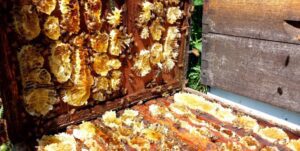
The first 6 years we tried to replicate the conditions of the natural hives offering swarms the possibility of building nests in spaces formed by 2 supers Langstroth nailed without boxes, or wax. At the same time,swarms were captured and installed on standard Langstroth material, with the difference of interspersed empty frames, without stamped wax, inserted so that they could freely work in their combs. In the sixth year it was decided to go ahead only with the Langstroth material given since the similarity of winter survival was observed between hives with natural nests and swarms that were captured and installed in Langstroth material.
Discussion
After 15 years of initiating the experience, we have more than 600 hives, solid and sustainable work plan with winter mortality rates close to 30%. In addition, the entire production can be certified as residue-free.
1 apiaries Honey Loiseau are part of the Project of Scientific and Technological Research PICT-2021-I-A-01100 called "Dynamics of the relationship mite-virus in populations of honey bees with different degrees of susceptibility to Varroa destructor in the Republic of Argentina" (RESOL-2023-31-APN-DANPIDTYI#ANPIDTYI), directed by Dr. REYNALDI Francisco (CEMIBA FCV UNLP – Argentina)
You Might Also Like
This Post Has One Comment
Comments are closed.


Congratulations Marcelo for taking a step towards sharing your productive knowledge. It is a very noble gesture that contributes to the opening of vision and to building a resilient sector.